Load cell pedals: what they are, and what they change
A load cell pedal set measures the pressure you apply, not the distance travelled. It is the change that buys the most consistency.
A conventional pedal set measures the distance the pedal travels. A load cell pedal set measures the force you apply to it. That difference in principle explains most of the gap in results.
Why pressure beats travel
In a real car, you do not brake by pushing the pedal down a precise number of centimetres. You apply a pressure, and your leg is far better at reproducing a pressure than a distance.
That is exactly what a load cell reproduces: a sensor measures the deformation of an element under load. The pedal barely moves; the resistance is what tells you where you are.
The practical consequence: braking becomes repeatable. On lap 20 you apply the same pressure as on lap 3. Consistency, not top speed, is what sets fast drivers apart.
What to look at beyond the words "load cell"
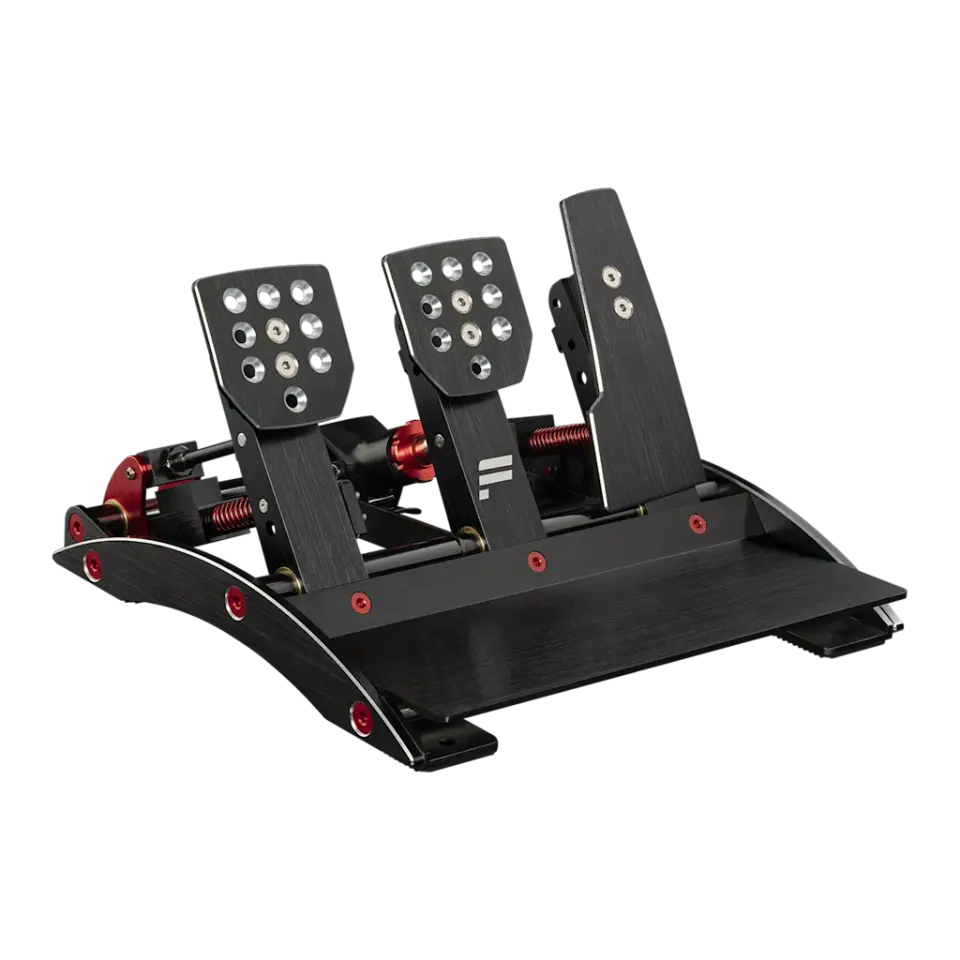
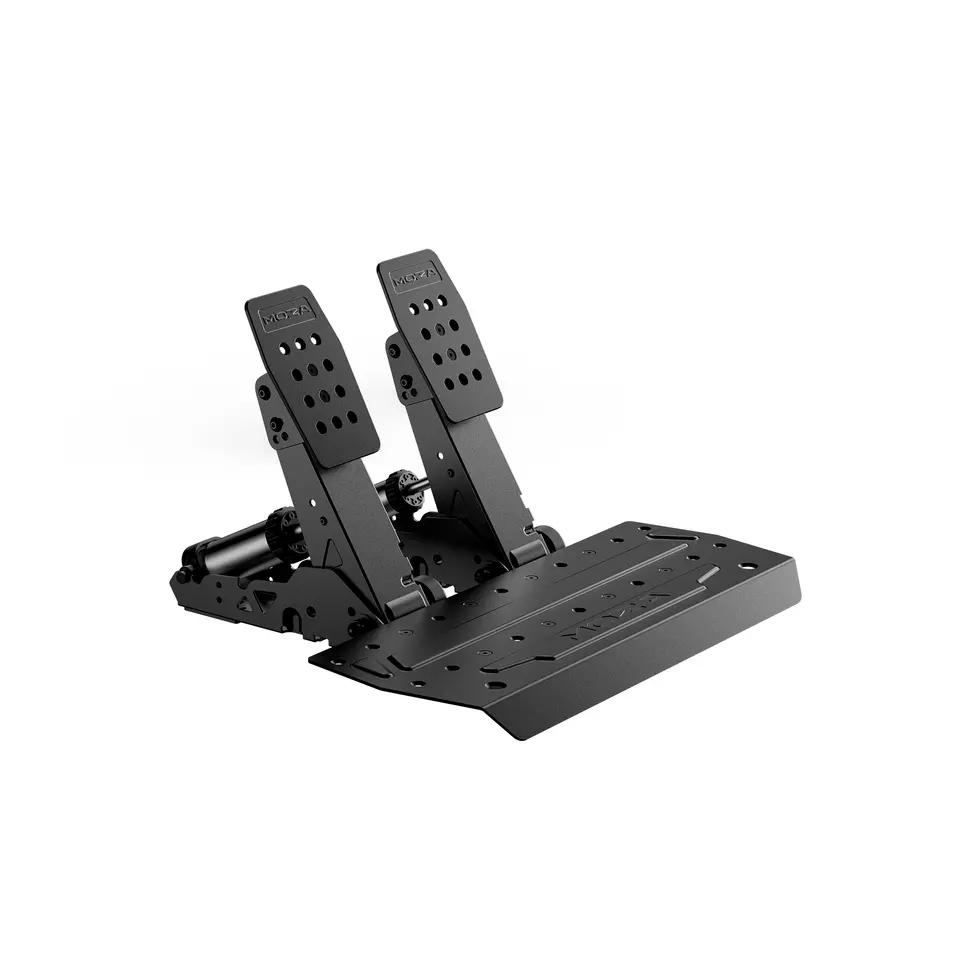
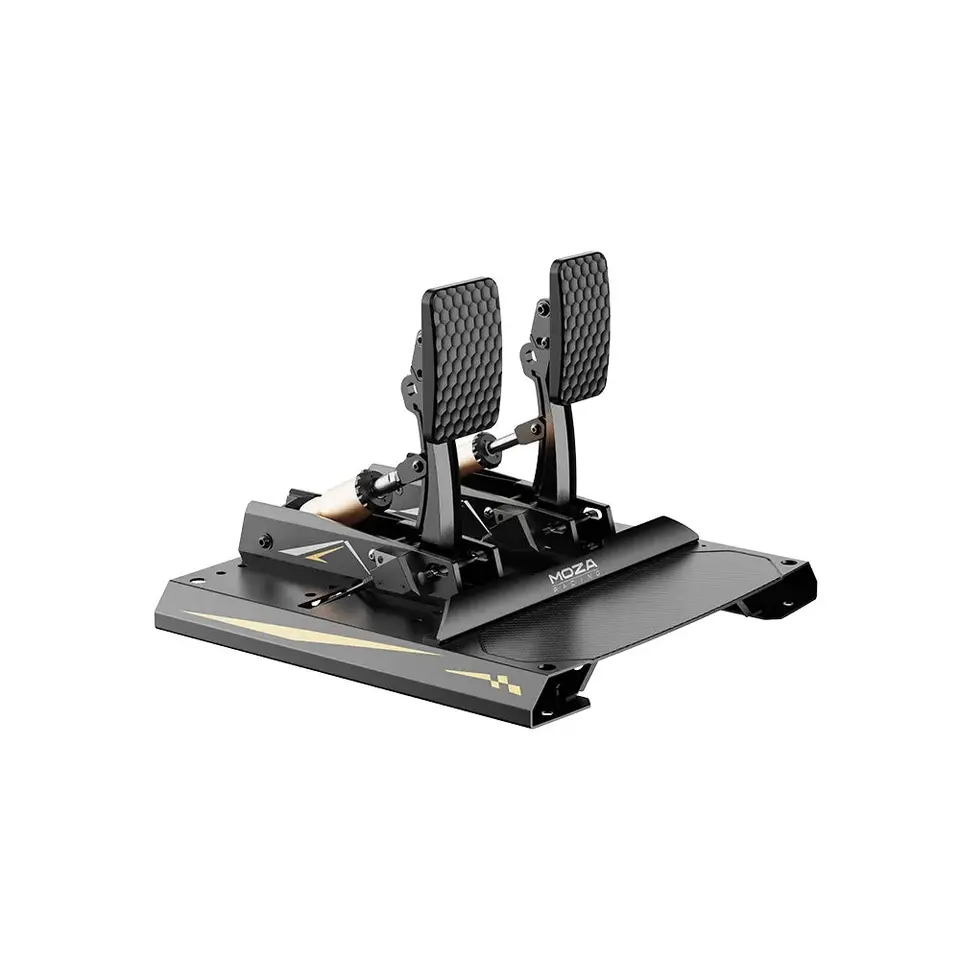
Maximum force. It sets the adjustment range. A pedal set capped at 30 kg suits a leg that is not asked for much; a model accepting 100 kg and above gets closer to a car-like feel. MOZA quotes 100 kg on the SRP2 and 200 on the CRP2, 240 euros apart.
Adjustability. Preload, travel, stiffness, pedal position: the more the set adjusts, the more you can fit it to your build and your driving position.
Mounting. A load cell pedal set is pushed hard. If it slides, the whole benefit disappears. That is why a set of this kind calls for a rigid support.
Load cell or hydraulic?
A hydraulic pedal set adds a fluid circuit that reproduces the progressive pressure build-up of a real braking system. The difference lies in the feel curve, not in precision: a good load cell is no less precise.
Given the price gap and the maintenance a hydraulic circuit implies, the load cell remains the best result for the money for the large majority of drivers.
Should you change pedals before changing base?
In most cases, yes. Moving from potentiometer pedals to a load cell set produces an immediate gain in consistency, measurable on the stopwatch. Moving from 8 to 12 Nm improves how much the wheel tells you, rarely the lap time.
This article contains links to retailers. See our affiliate disclosure page.
Products mentioned