Cockpit, wheel stand or desk clamp: how to choose
The rig is part of the force feedback chain. Going too small means paying for torque the structure absorbs.
A rig is not a comfort accessory. It transmits force feedback, or it absorbs it. That is why a poor rig cancels part of what you paid for in the base.
The four options, and where each one stops
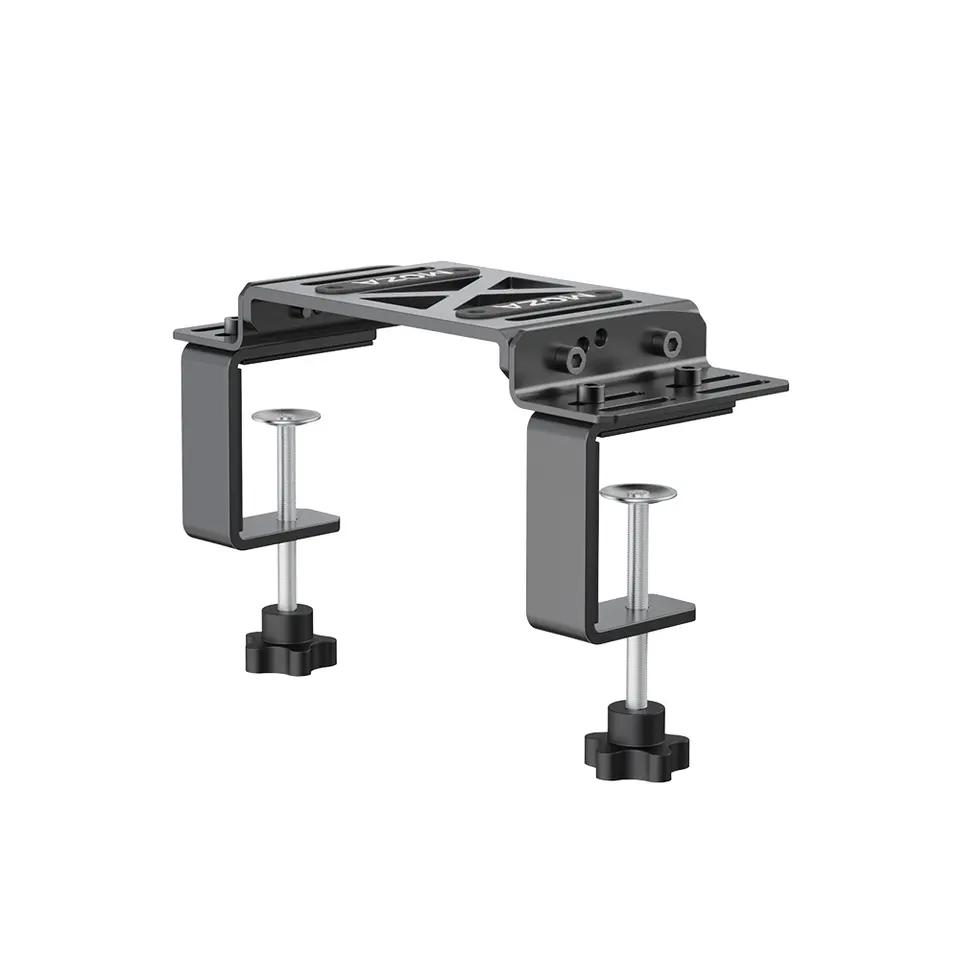
The desk clamp. Cheap and discreet. Its limit is the desk itself: a chipboard top flexes from 6 to 8 Nm. Fine for an entry-level base, not beyond.
The dedicated wheel stand. A standalone structure carrying the base and the pedals, to be used with an existing chair. A good compromise when space is short.
The tubular cockpit. A complete structure with a seat. Adequate rigidity up to around ten newton-metres, often foldable, which is decisive in a flat.
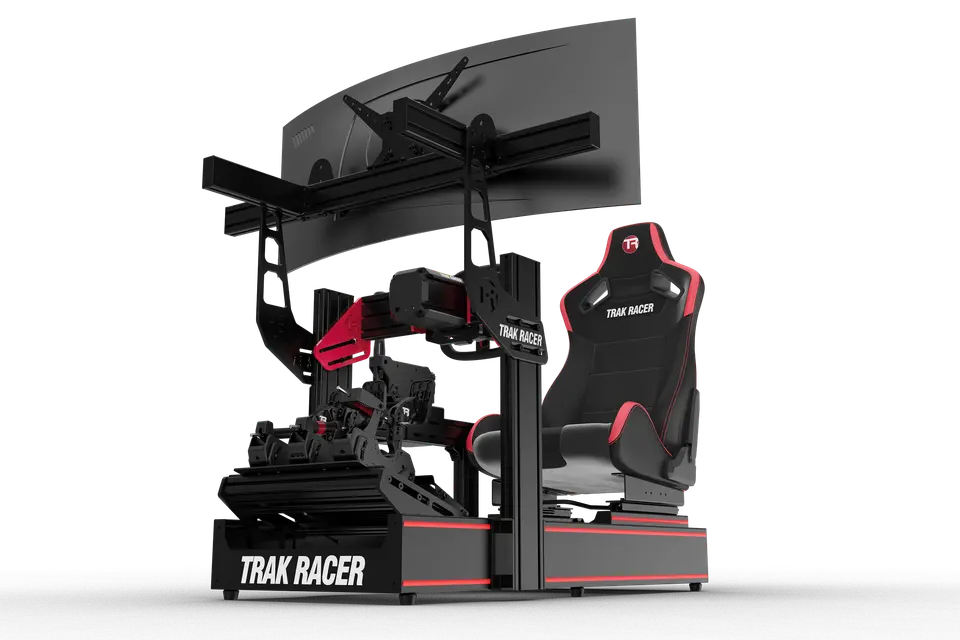
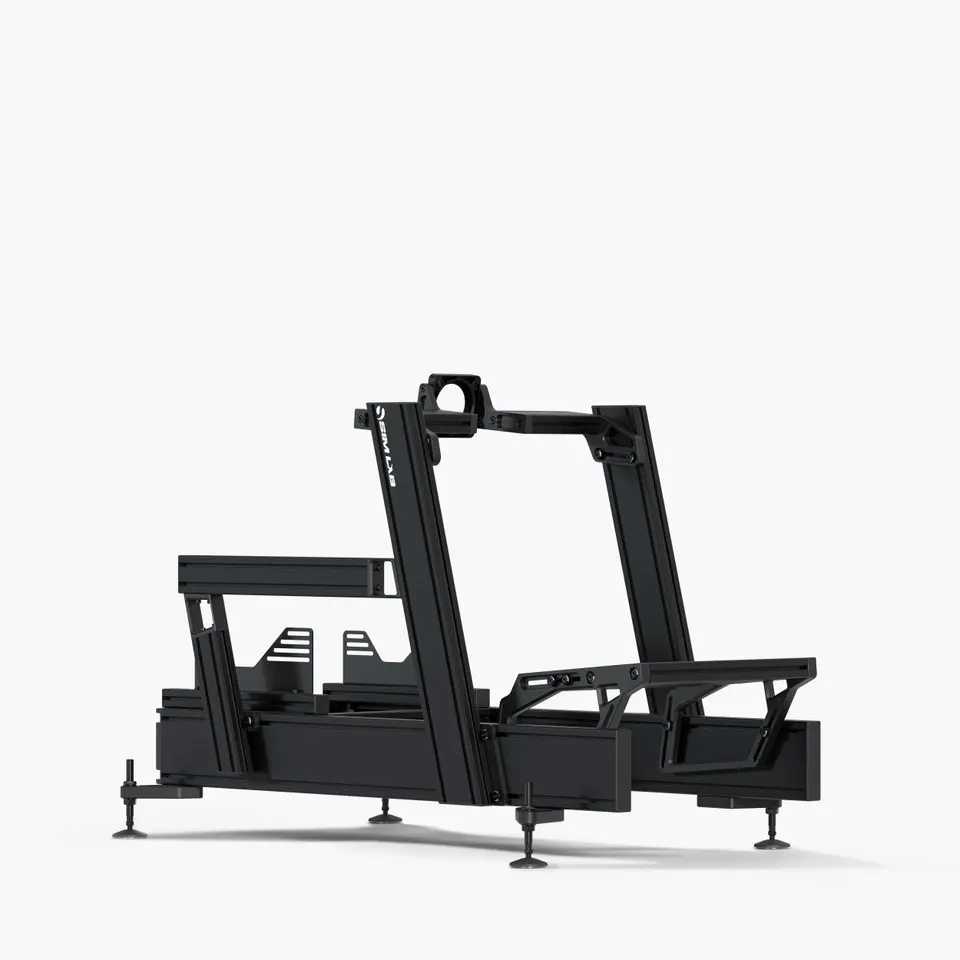
The aluminium profile rig. Higher rigidity and, above all, full modularity: you add a monitor mount, a button box or a third pedal without drilling anything. The trade-off is a fixed footprint, a long build and the price.
The criterion that decides
Start from the torque of your base, not from your cockpit budget:
- up to 6 Nm: a desk clamp is acceptable;
- from 8 to 12 Nm: a tubular cockpit or a rigid dedicated stand;
- beyond 15 Nm: aluminium profile, with no reasonable alternative.
Buying a 15 Nm base and bolting it to a desk means paying twice: once for the torque, once for the cockpit you will have to buy anyway.
Do not forget the pedals
A load cell pedal set is pushed at 40 kg or more. If it is not bolted to the structure, it slides, and the whole benefit of the load cell disappears. The pedal plate is part of choosing the rig, not a later step.
This article contains links to retailers. See our affiliate disclosure page.