Sim racing in a flat: noise, space and neighbours
Space, structure-borne noise and airborne noise are three separate problems. The subject that decides a purchase most often, and the least covered.
A sim racing setup in a flat raises three separate problems, better treated one at a time: space, noise carried by the structure and airborne noise.
Space: the figure people forget
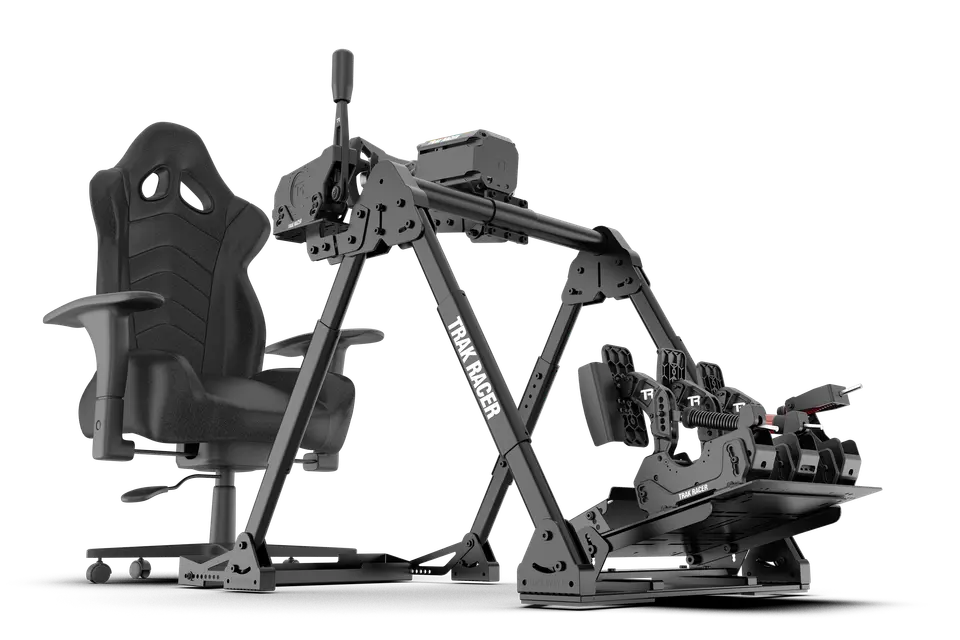
A GT-style cockpit takes up around 130 x 70 cm of floor. To that you have to add the room the seat needs to slide back and the space to sit down. Count on 200 x 100 cm of real footprint.
That is precisely the calculation most buyers make after delivery. Measure first.
A foldable frame solves the problem at the cost of rigidity, an acceptable trade-off below ten newton-metres or so, a penalty above.
Noise carried by the floor
This is the noise that actually bothers the neighbours below, and it has nothing to do with the volume you hear in the room. Every jolt of force feedback and every push on the brake travels through the structure into the floor.
Three measures, in order of effectiveness:
- Separate the cockpit from the floor: a thick rug is not enough. Anti-vibration mounts or a dense rubber pad under each foot are far more effective.
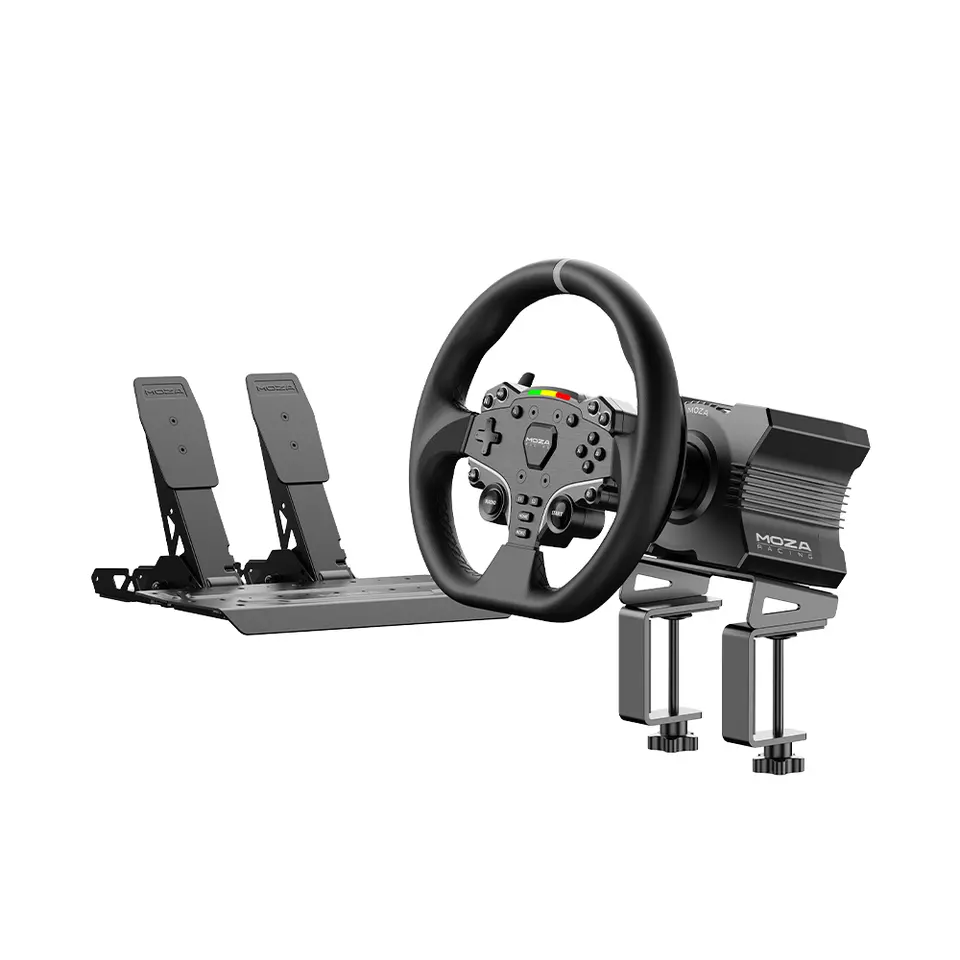
- Limit braking force: setting a load cell pedal set to a lower range directly reduces the energy transmitted.
- Reduce the maximum torque in use: going from 100 % to 60 % changes little of the useful feel and a great deal of the shock passed on.
Airborne noise
It comes mostly from the motor under load and, to a lesser extent, from the pedals. It stays moderate with a modern base, but a party wall carries it.
Choosing a less powerful base is not an absurd concession here: in a flat, a well-set 5 to 9 Nm base often gives a better real experience than a 15 Nm base you never dare use fully.
A typical setup in a tight space
What not to do
Bolting the cockpit to the wall to save floor space: the building structure then becomes a sounding box, and the problem gets worse for the whole block.
This article contains links to retailers. See our affiliate disclosure page.
Products mentioned