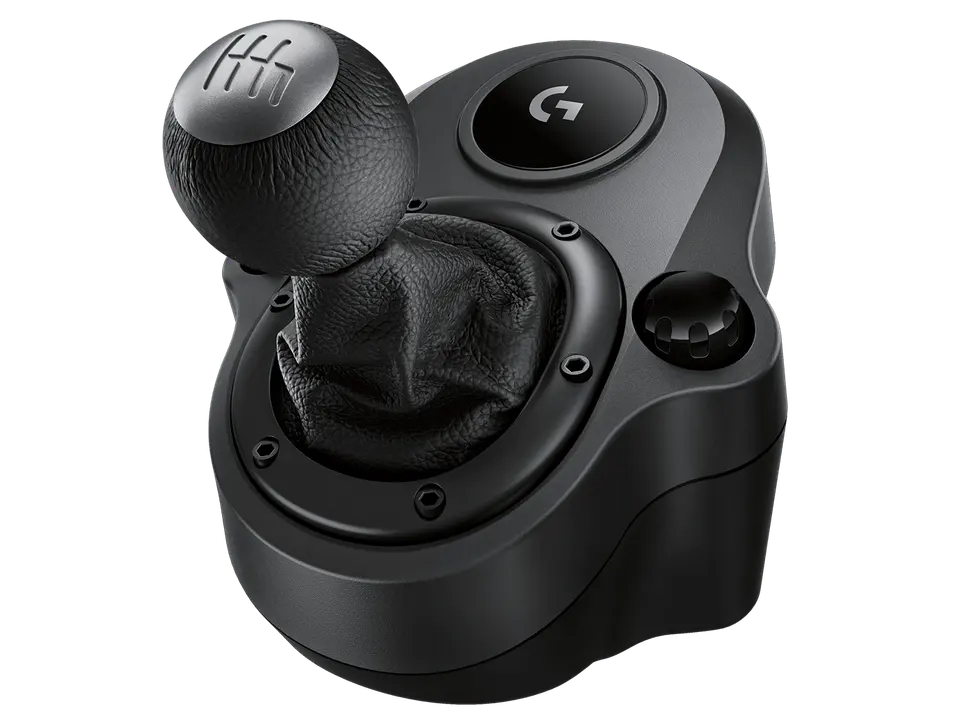
Do you need a shifter for sim racing?
Useful if you drive cars that have one, superfluous otherwise. What sets an H-pattern apart from a sequential or dual mode shifter, and why the connection decides console compatibility.
A shifter is only useful if you drive cars that have one. In modern single-seaters, gears are changed with the wheel's paddles, and a shifter has no use. It makes sense with road cars and classic cars with a manual gearbox, for an H-pattern, or with the many rally and race cars that use a sequential gearbox. The choice then comes down to the type of shifter, and to its connection, which also decides console compatibility.
H-pattern, sequential or dual mode
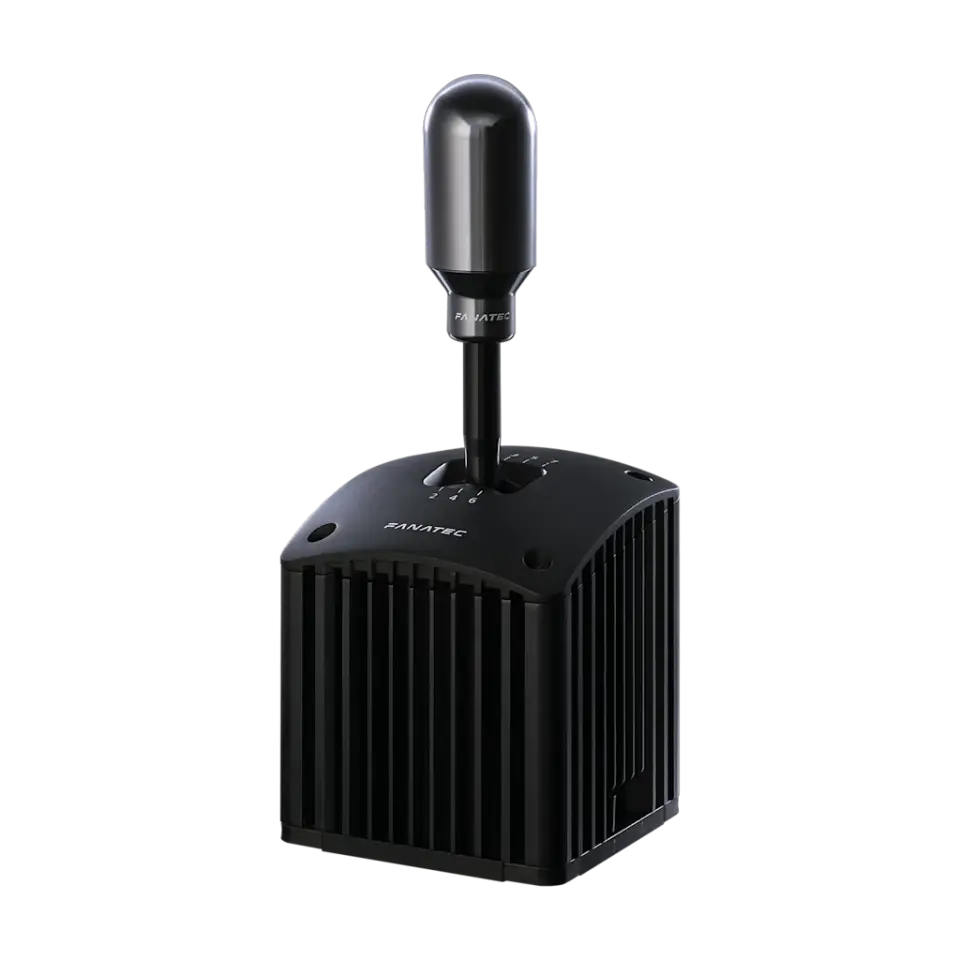
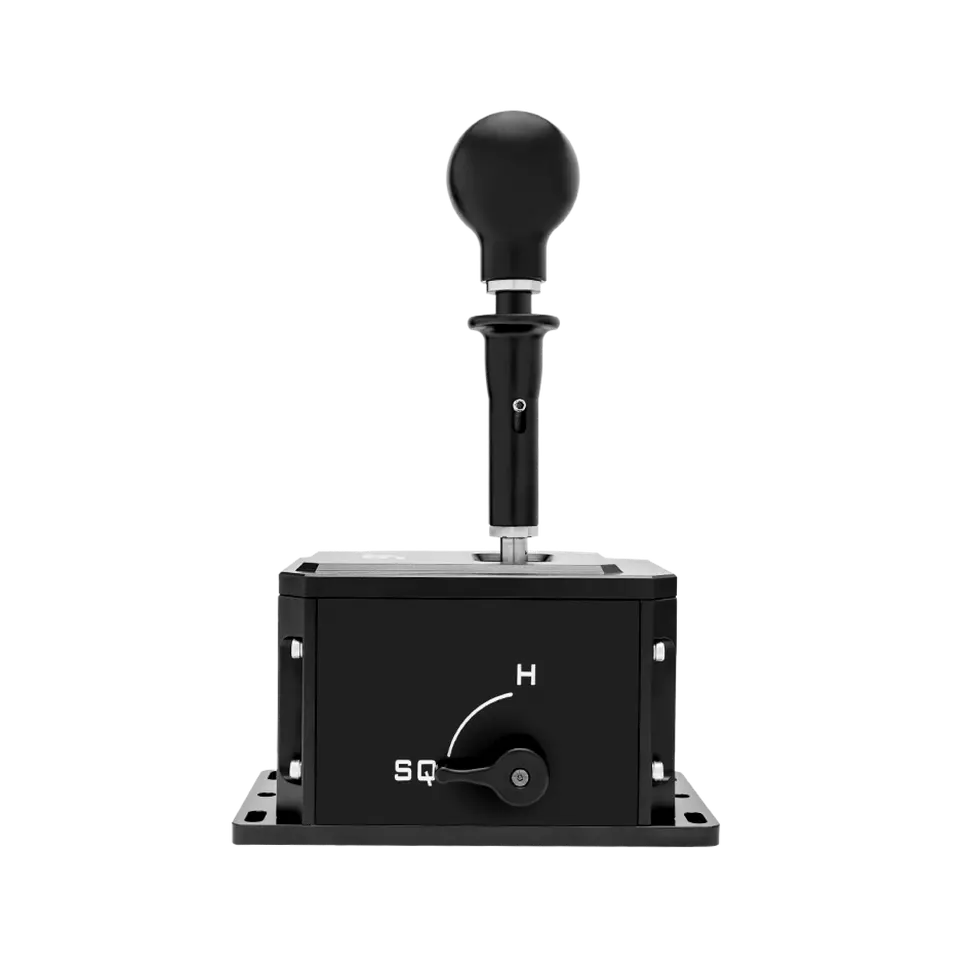
An H-pattern shifter reproduces a manual gearbox, with six or seven gears and reverse. To prevent mistakes, recent models lock reverse and seventh gear: you press the lever down on Fanatec and MOZA units, and push through a point of resistance on Logitech's.
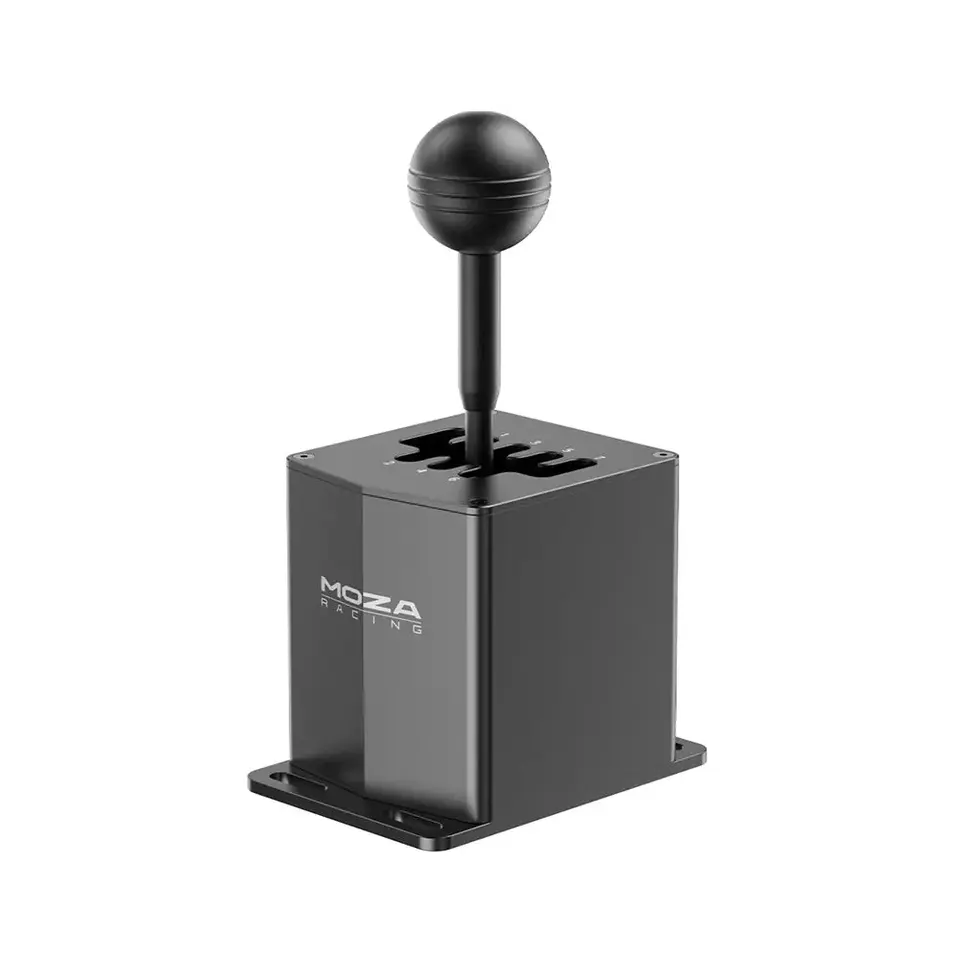
MOZA Racing
MOZA HGP Shifter
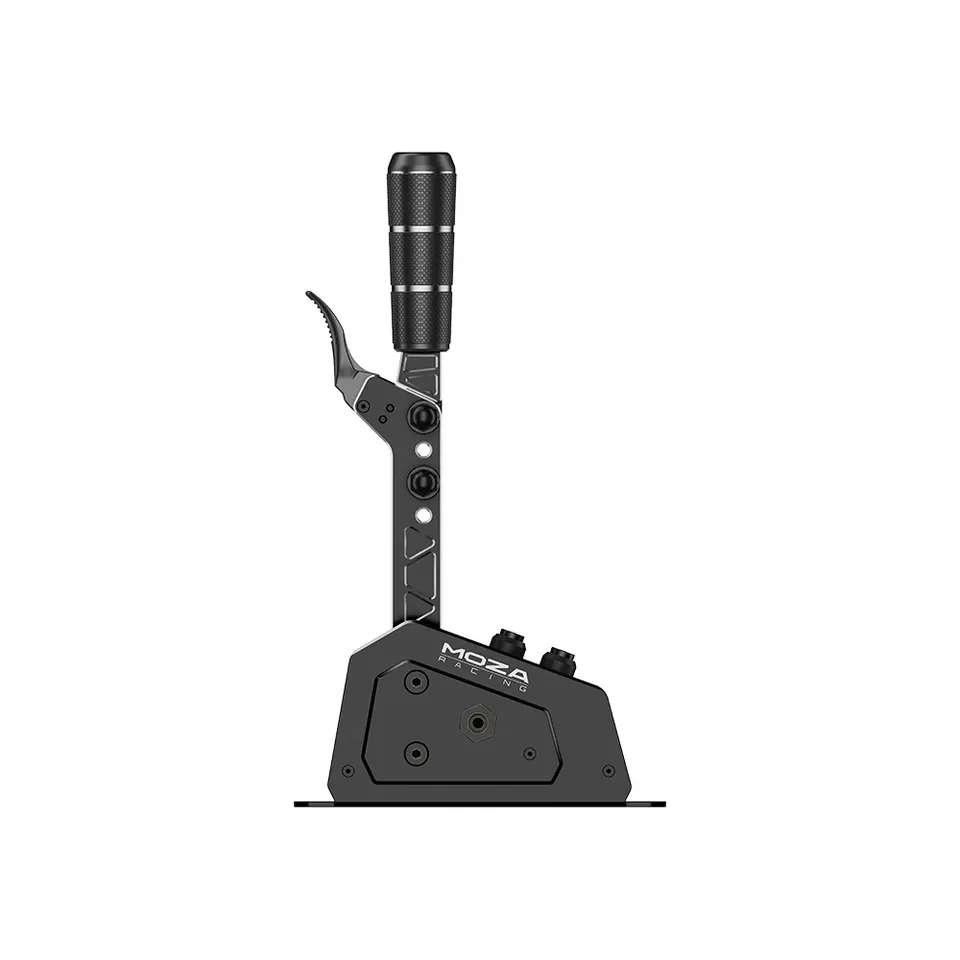
A sequential shifter is pushed or pulled one gear at a time and returns to the centre. Simagic makes two, the Q1 and the Q1S, with a planetary gear mechanism and an adjustable damper. The MOZA SGP adds two backlit buttons and a handle adjustable in height over 64 mm.
A dual mode shifter switches from one to the other. The Fanatec ClubSport Shifter SQ V1.5 switches from its seven-gear pattern to sequential with a selector, without tools or unplugging. The Simagic DS-8X switches from an eight-gear pattern to sequential with a single lever, without disassembly. Asetek announces its own, with seven gears, for 6 October 2026.
Logitech takes a different approach with the RS Shifter & Handbrake, which serves either as a sequential shifter or as a handbrake, a switch changing from one use to the other without tools.
What the sensors measure
Most recent shifters detect position without contact, through Hall effect or angle sensors, which do not wear through friction. Logitech says so for the RS H-Shifter, MOZA for the SGP, with a Hall effect sensor, and for the HGP, whose contactless angle sensor is announced at 15 bits. Asetek announces Hall effect sensors on its shifter. Simagic does not publish the sensor type of its shifters.
The connection decides the console
On PC, a USB shifter works on its own. On console, the manufacturers who allow it route it through one of their licensed bases or wheels: the connection therefore decides compatibility.
The Fanatec shifter plugs into a Fanatec base, the only way to use it on PlayStation or Xbox. The supplied USB adapter lets you use it on PC with a wheel from another brand, but not on console. MOZA's shifters connect over USB to the PC or by RJ11 cable to a MOZA base: MOZA says its shifters work on Xbox through the base, and publishes nothing for PlayStation. Simagic provides USB to the PC or to a Simagic base, with no information on consoles.
At Logitech, the RS shifters connect over USB and, on console, go through a compatible Logitech wheel. With a G29, G920 or G923, the Racing Adapter is required, and the RS H-Shifter then loses its seventh gear: these wheels only handle six gears and reverse. The older Driving Force Shifter, with six gears, is designed for these three wheels, which it plugs into.
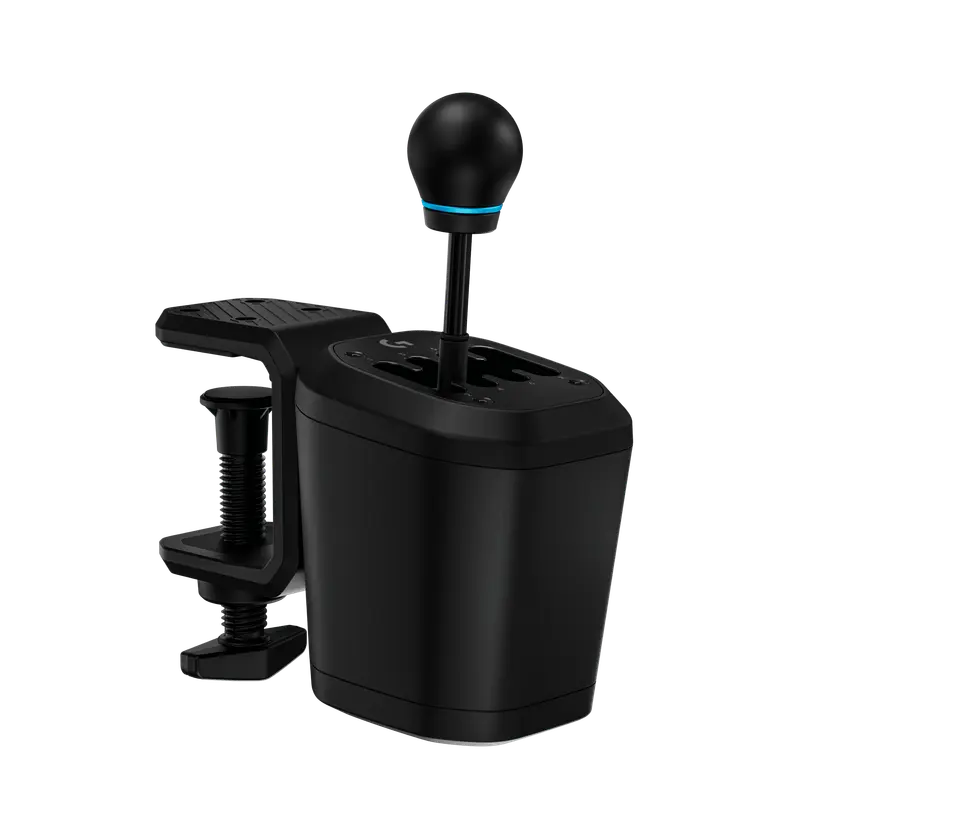
Logitech G
Logitech G RS H-SHIFTER
Our console licensing guide explains why a console ignores an unlicensed device, whatever its plug.
The settings that matter
Shift resistance can be adjusted on most models: with a key on the Fanatec, with a damper on the MOZA SGP and the Simagic units. The MOZA HGP adds an automatic throttle blip on downshifts, enabled and adjusted in the Pit House software. Think about mounting too: a shifter fits on the cockpit or on a desk clamp, and the knob can be swapped on most models, using the thread each manufacturer publishes.
If you are unsure, start with the wheel's paddles and look at which cars you really drive. A shifter can be added later, as long as you check that it connects to your base.
This article contains links to retailers. See our affiliate disclosure page.
Products mentioned
MOZA Racing
MOZA HGP Shifter
Logitech G
Logitech G RS H-SHIFTER
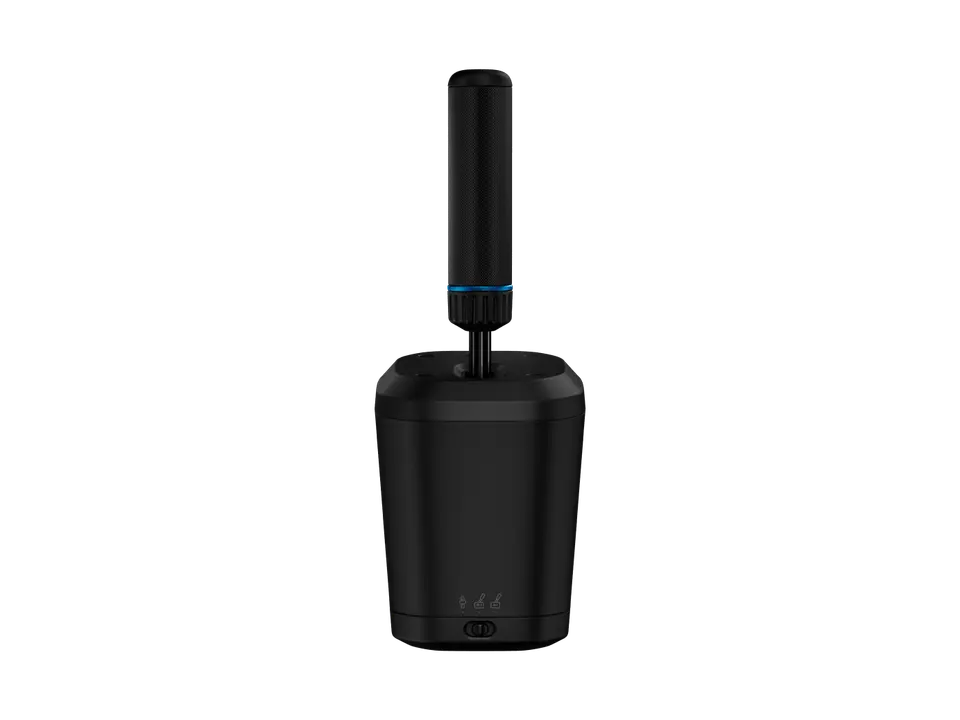
Logitech G
Logitech G RS SHIFTER & HANDBRAKE