Sim racing handbrakes: load cell, sensor and connection
Indispensable in rally and drifting, useless on a circuit. What a handbrake measures, force or travel, the button mode, and the connection that decides console compatibility.
A handbrake is only useful in rally and drifting, to rotate the car by locking the rear wheels. On a circuit, it has no use. If you practise these disciplines, the choice comes down to what the handbrake measures, force or travel, then to its connection, which decides console compatibility.
Force or travel: what the sensor measures
A load cell handbrake measures the force applied to the lever, like the brake pedal of a load cell pedal set. Simagic makes two: the TB-1, which measures up to 100 kg, and the TB-Neo, announced at 100 kg with 12-bit resolution. The Fanatec ClubSport Handbrake V2 also uses a load cell, whose capacity Fanatec does not publish. Asetek announces 200 kg for the handbrake it releases on 6 October 2026.
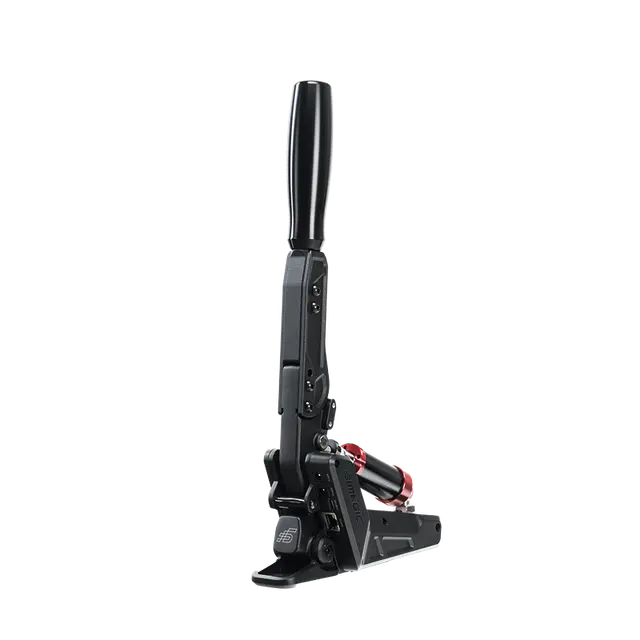
Simagic
Simagic TB-NEO Handbrake
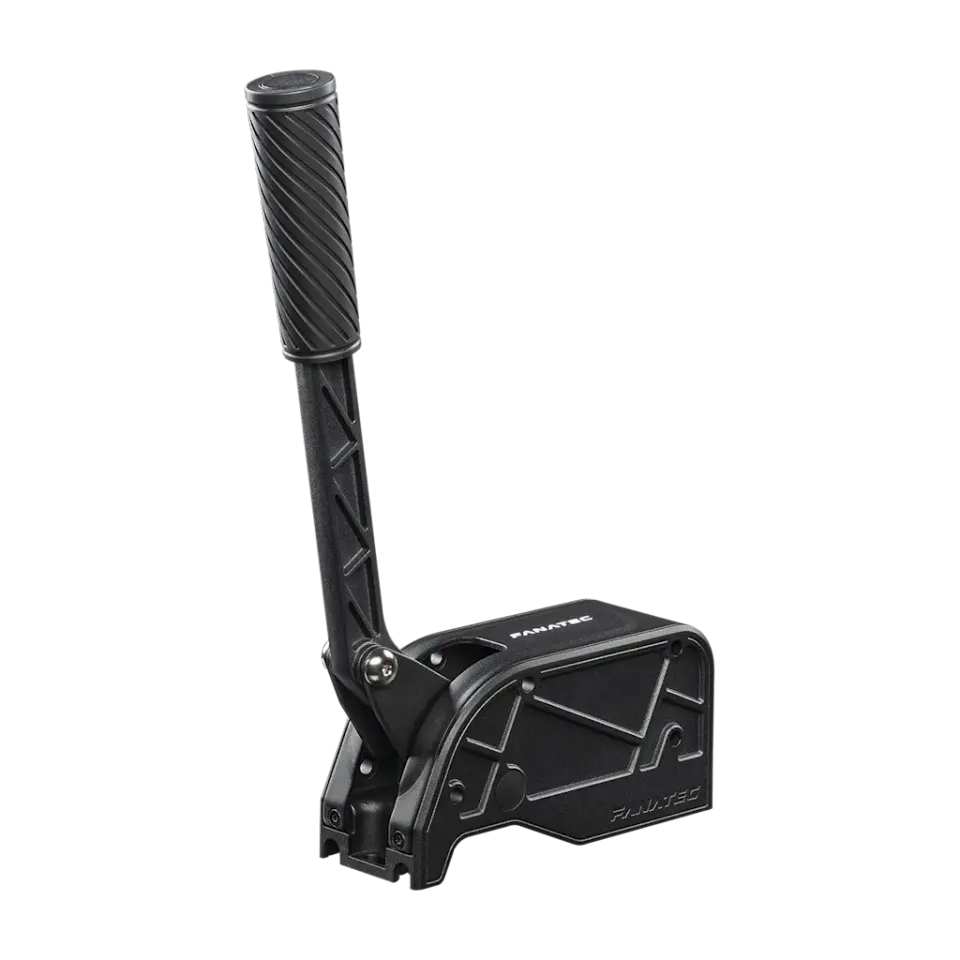
The others measure the lever's travel. The MOZA HBP uses a contactless angle sensor, announced at 15 bits. The Fanatec ClubSport Handbrake V1.5, the previous generation, has an analogue potentiometer sensor. The handbrake of the Logitech RS Shifter & Handbrake is analogue too, over 20 degrees of travel, with a dual-stage spring.
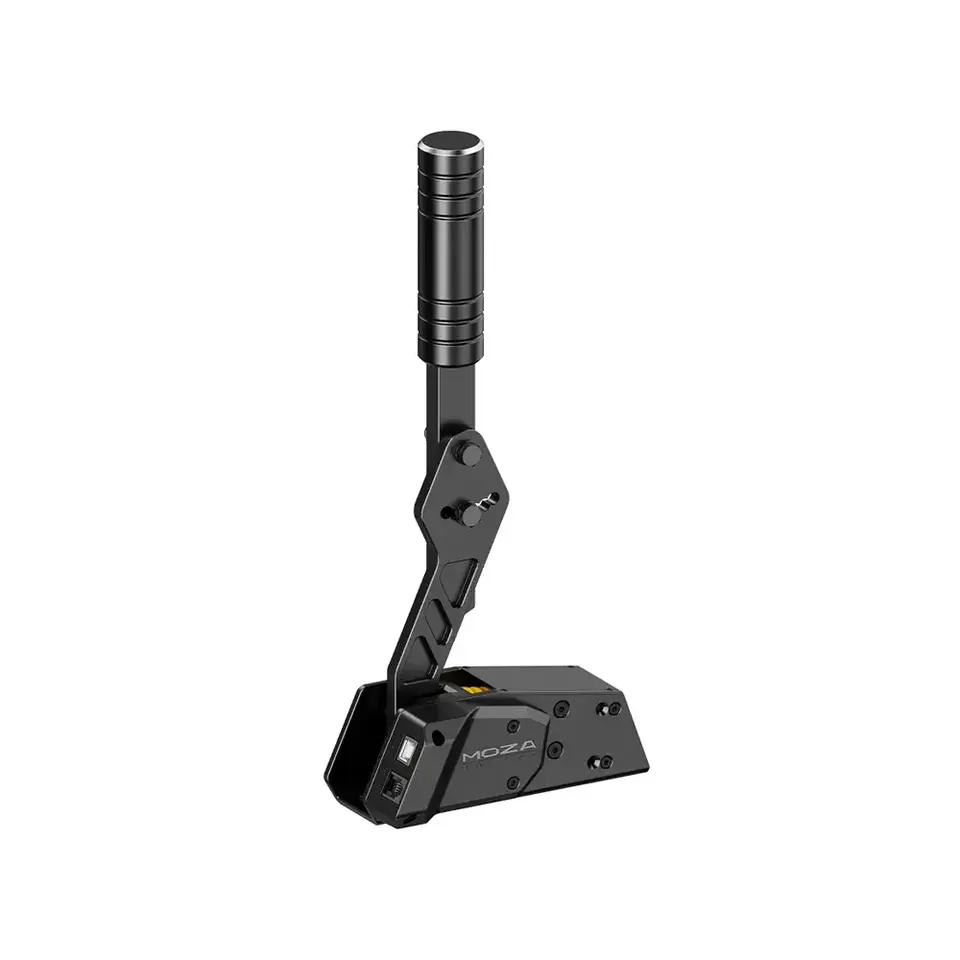
MOZA Racing
MOZA HBP Handbrake
Both principles allow modulation. The difference is the same as with pedals: with a load cell, you modulate by the pressure applied; with a position sensor, by the lever's movement. Our load cell pedals guide details what that changes.
Button mode
Some models can also be set to on or off, like a button. The MOZA HBP manual offers an on/off button mode or an axis mode with continuous travel. Asetek announces an analogue mode and a digital mode. At Logitech, digital mode is imposed on console with a G Series wheel, where the handbrake loses its analogue response.
The connection decides the console
On PC, a USB handbrake works on its own. The MOZA HBP connects over USB or to a MOZA base, the Simagic units over USB or to a Simagic base, the TB-Neo also taking the RJ45 cable of Alpha EVO bases. The Logitech RS Shifter & Handbrake connects over USB.
Fanatec does things differently. The ClubSport Handbrake V2 plugs by RJ12 into a Fanatec base or into the handbrake port of some Fanatec pedals, or over USB through the supplied adapter for standalone use on PC. On console, it works through a Fanatec base: a PlayStation-licensed base on PS4 and PS5, a base with an Xbox-licensed Fanatec wheel on Xbox, depending on the game. The V1.5 does not work on its own and goes through a Fanatec product, or through the optional USB adapter on PC.
At Logitech, consoles go through a compatible Logitech wheel, with the Racing Adapter for a G Series wheel. MOZA says its peripherals work on Xbox through a MOZA base, and Simagic publishes nothing about consoles.
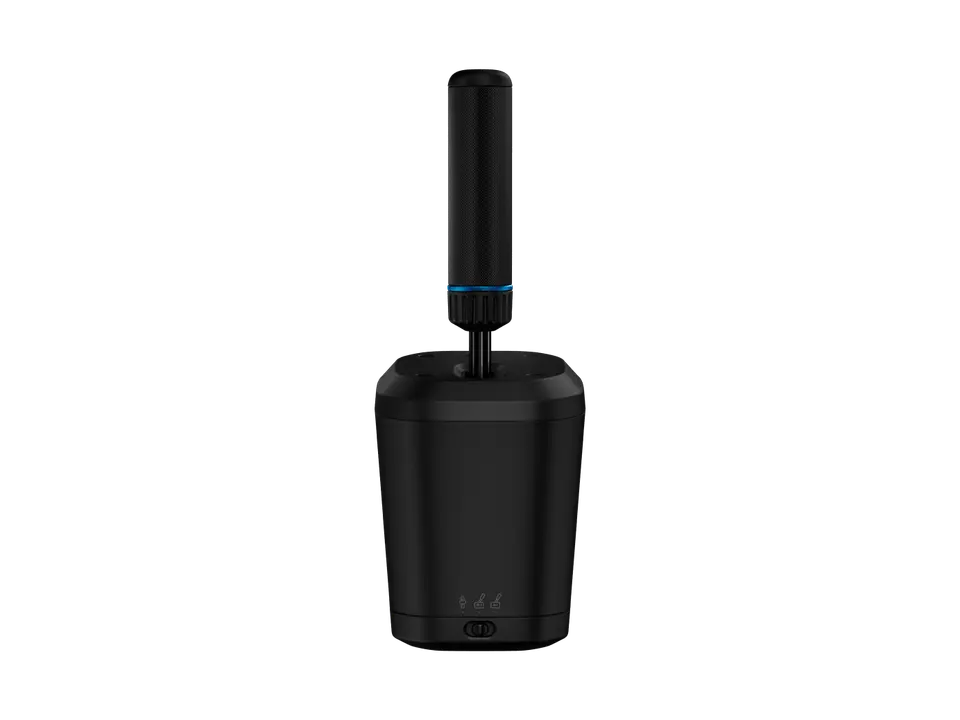
Logitech G
Logitech G RS SHIFTER & HANDBRAKE
Settings
Resistance can be adjusted almost everywhere. The Fanatec V2 has adjustable preload, three lever angles and three travel settings, from 60 to 80 mm. The Simagic TB-Neo stacks up to eight elastomers in its barrel, turns horizontal or vertical, and accepts hydraulic and haptic modules sold separately. The TB-1 changes resistance through its rubbers, in two stages. The MOZA HBP changes springs and position, horizontal for rally and drifting, vertical for road cars. The Logitech sets its response curve in the G HUB software.
Mounting matters as much as settings. A handbrake is pulled hard: fixed to a support that moves, it loses the modulation you paid for.
This article contains links to retailers. See our affiliate disclosure page.
Products mentioned
Simagic
Simagic TB-NEO Handbrake
MOZA Racing
MOZA HBP Handbrake
Simagic
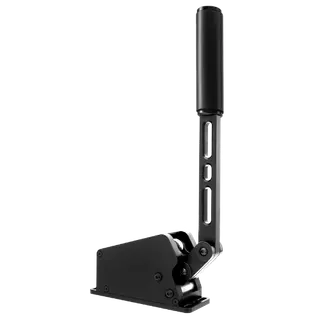
Simagic TB-1 Handbrake
Logitech G