What is direct drive in sim racing?
The wheel is mounted straight on the motor shaft, with no belt and no gears. What that changes in practice, and from what price it earns its keep.
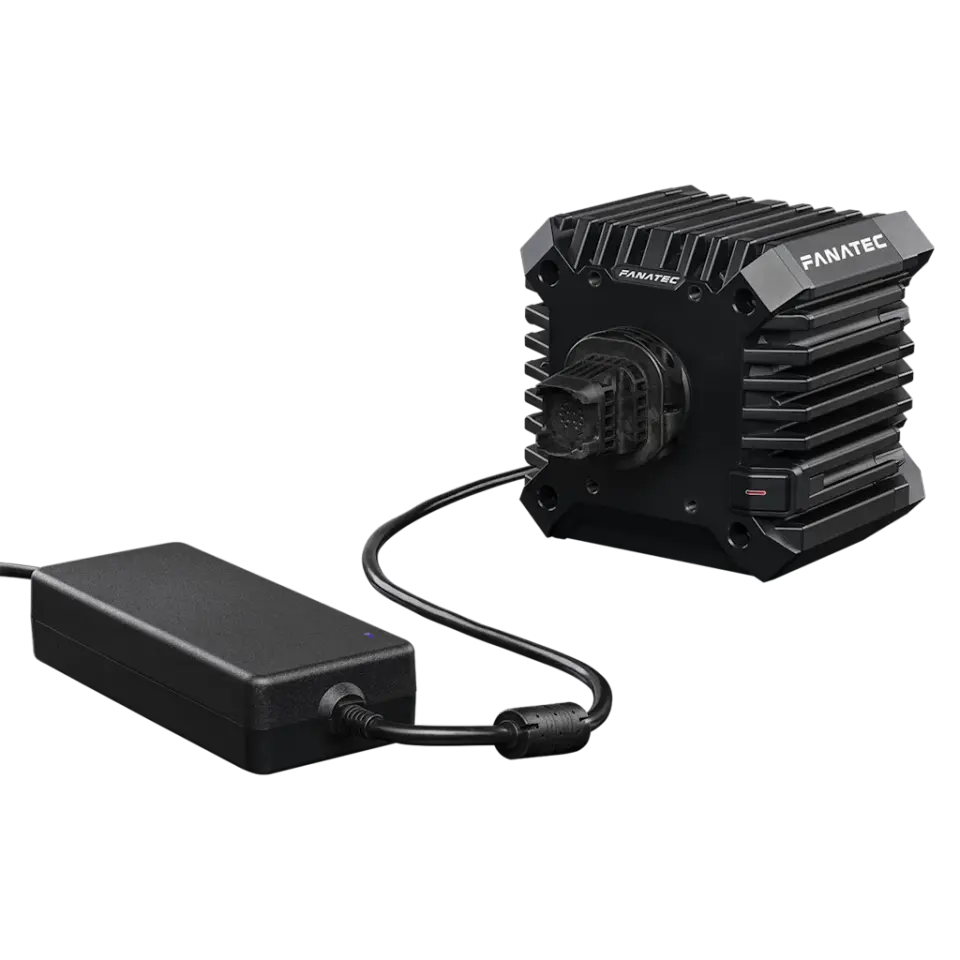
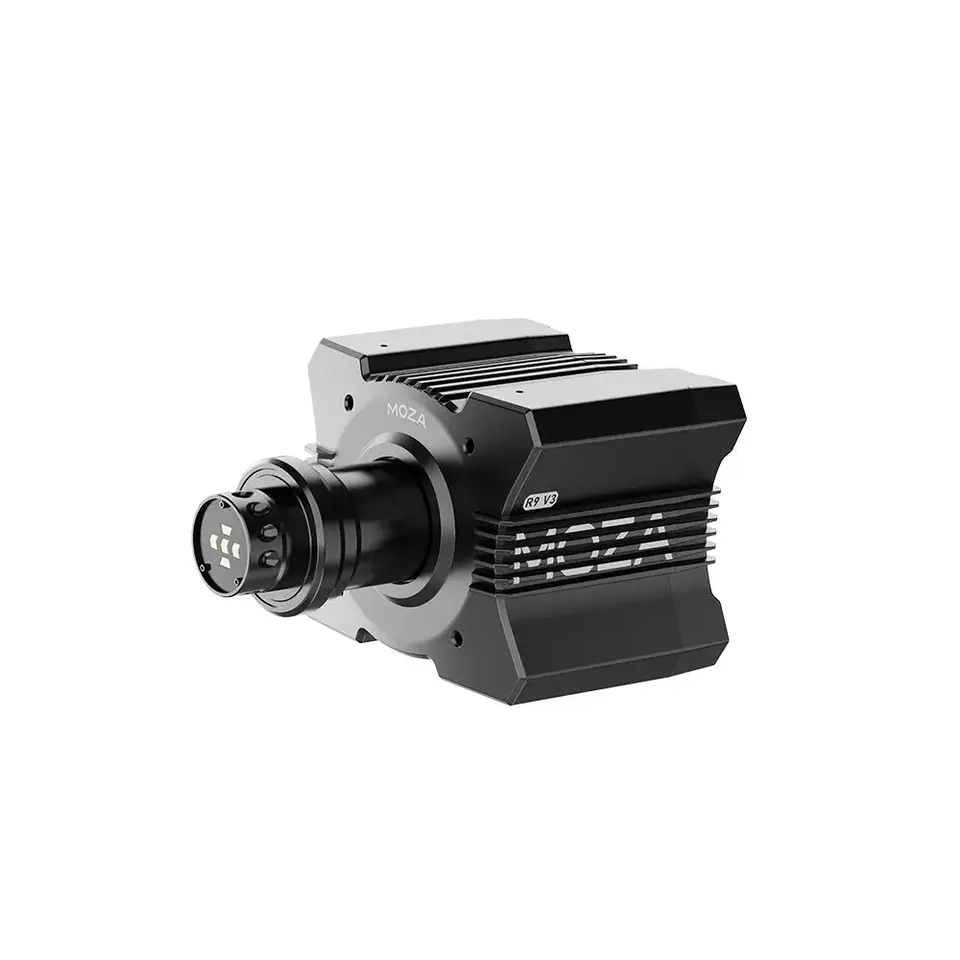
In a direct drive base, the wheel is mounted straight on the motor shaft. No belt, no gears between the force generated and your hands. That is the only difference in principle with the earlier technologies, and it is enough to explain the gap in feel.
Why the transmission changes everything
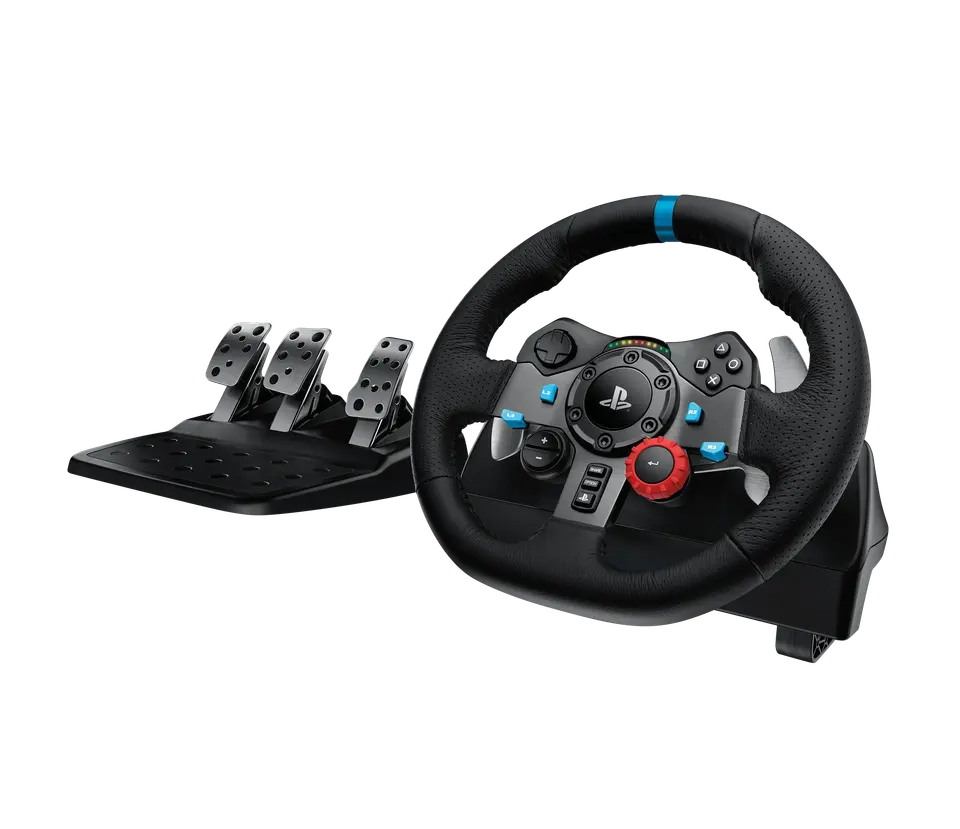
A gear set and a belt serve the same purpose: gearing up a small motor to produce usable torque. In exchange they bring three unavoidable flaws.
Mechanical play first: between two gear teeth there is a gap. On a change of direction, that play shows up as a dead moment, then a jolt. Inertia next: the intermediate parts have mass to set in motion, which rounds off the fast variations. Filtering last: every stage of transmission absorbs the micro-variations, precisely the ones that tell you about grip.
A direct drive base removes all three at once. It is not that it is "stronger": it is more faithful. A well-set 2 Nm geared wheel stays usable; it simply passes on a smoothed version of what happens under the tyres.
What you actually feel
The gain people mention most is not power but texture. Running over a kerb, the front end letting go progressively, the load coming back on corner exit: that information exists in the game, and mechanical transmission removed part of it.
The second gain is linearity. A force twice as large in the simulation produces a force twice as large in your hands. It sounds obvious; it is nonetheless what belt systems struggle to guarantee across the whole range.
How many Nm, and from what point?
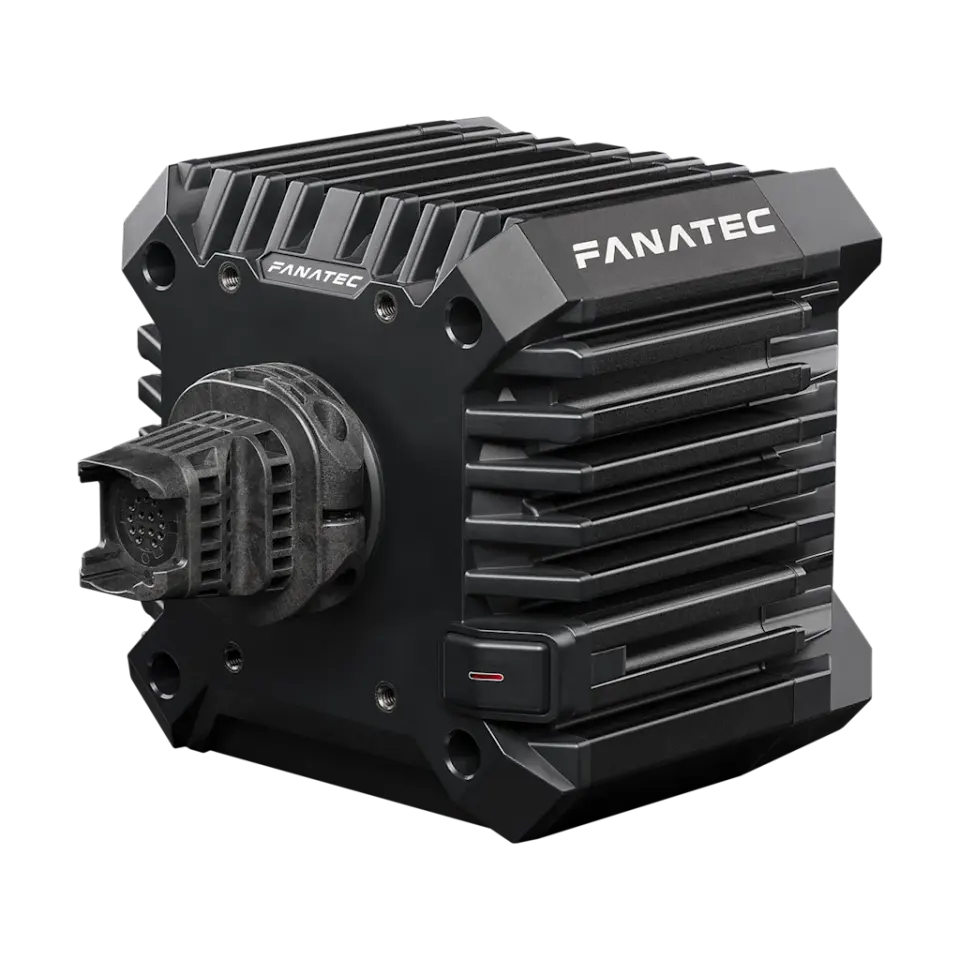
Torque is measured in newton-metres. For scale: 5 Nm already asks for real effort over several laps, and 20 Nm goes beyond what the power steering of a road car produces.
The classic mistake is to aim for the highest torque within reach. The limiting factor is almost never the base: it is the rig. A standard desk flexes from 8 Nm, and that flex absorbs exactly the micro-information you paid dearly for.
A simple decision rule:
- up to 5-6 Nm: a rigid desk or a dedicated stand is enough;
- from 8 to 12 Nm: a cockpit becomes necessary;
- beyond 15 Nm: an aluminium profile frame is no longer optional.
Direct drive, belt, gears: the table
Do you have to move to direct drive?
No. That is an honest answer, not a precaution. If your total budget is constrained, good pedals in front of a geared wheel gain more lap time than a direct drive base in front of potentiometer pedals. Braking is what sets regular drivers apart; steering comes after.
At equal budget, though, and from around 350 euros for the base alone, there is no longer much of an argument for a new belt-driven system.
This article contains links to retailers. See our affiliate disclosure page.
Products mentioned