Two or three pedals: do you need a clutch in sim racing?
The third pedal is only useful with a manual gearbox. In single-seaters and modern racing GT cars, the clutch is operated with paddles on the wheel. When the pedal becomes useful, and how to add it to an existing pedal set.
A clutch pedal is only useful if you drive cars that have one. Single-seaters and modern racing GT cars operate the clutch with paddles on the wheel, and only use it at the start. The third pedal makes sense with a manual gearbox and an H-pattern shifter: road cars, historic cars, rally, drifting. Almost every brand sells the clutch on its own, so you can start with two pedals and add the third later.
In single-seaters and GT cars, the clutch is on the wheel
In Formula 1, the FIA's 2026 technical regulations require the clutch to be operated by paddles mounted on the steering wheel, two at most, pulled towards the driver to disengage. Fanatec draws the consequence for sim racing: the clutch paddle is used at the start, on the grid or leaving the pits, not during the race, and a clutch pedal is not needed to drive a single-seater.
Racing GT cars have gone the same way. BMW describes the clutch of its M4 GT3 as electro-hydraulic and operated by paddles on the steering wheel. Porsche wrote in 2018 that the one in the 911 GT3 R removed the need for a clutch pedal. Gears are changed with the paddles, without declutching.
Clutch paddles on sim racing wheels
To reproduce these starts, several sim racing wheels carry two clutch paddles. Asetek describes the method with its own: pull both to launch, then release one to find the bite point. MOZA announces paddles with several modes on its KS wheel, designed for standing starts. Fanatec's Podium Advanced Paddle Module offers an F1-style bite point mode, set and saved in the base's tuning menu.
When the third pedal becomes useful
With a manual gearbox, the clutch is operated by foot. Fanatec sells its clutch kit for driving a fully manual gearbox with an H-pattern shifter, and presents the third pedal as ideal for rally and drifting. MOZA highlights standing starts and heel-and-toe downshifts. That technique needs all three pedals: the right foot brakes and blips the throttle while the left foot works the clutch.
Our guide do you need a shifter helps you choose the shifter that goes with it, H-pattern or sequential. If you do not assign a clutch pedal, check the game's assists to see how it handles the clutch for you.
Adding a clutch to your pedal set
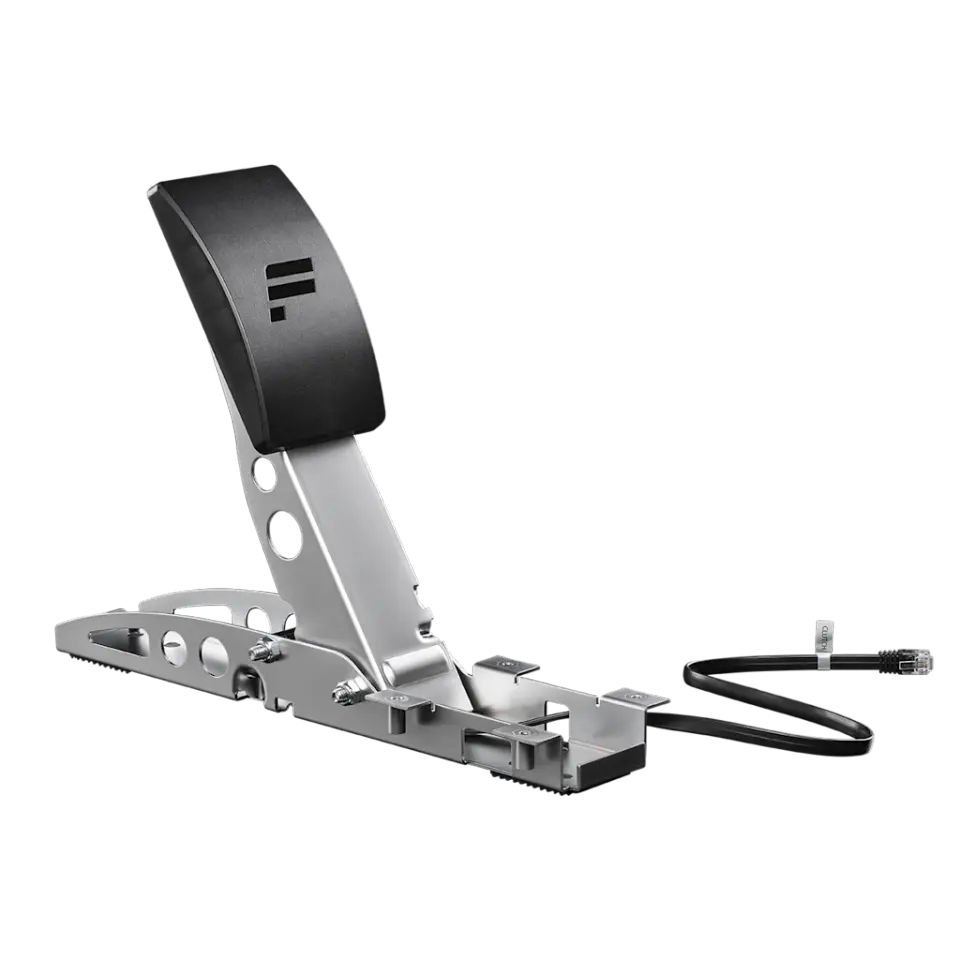
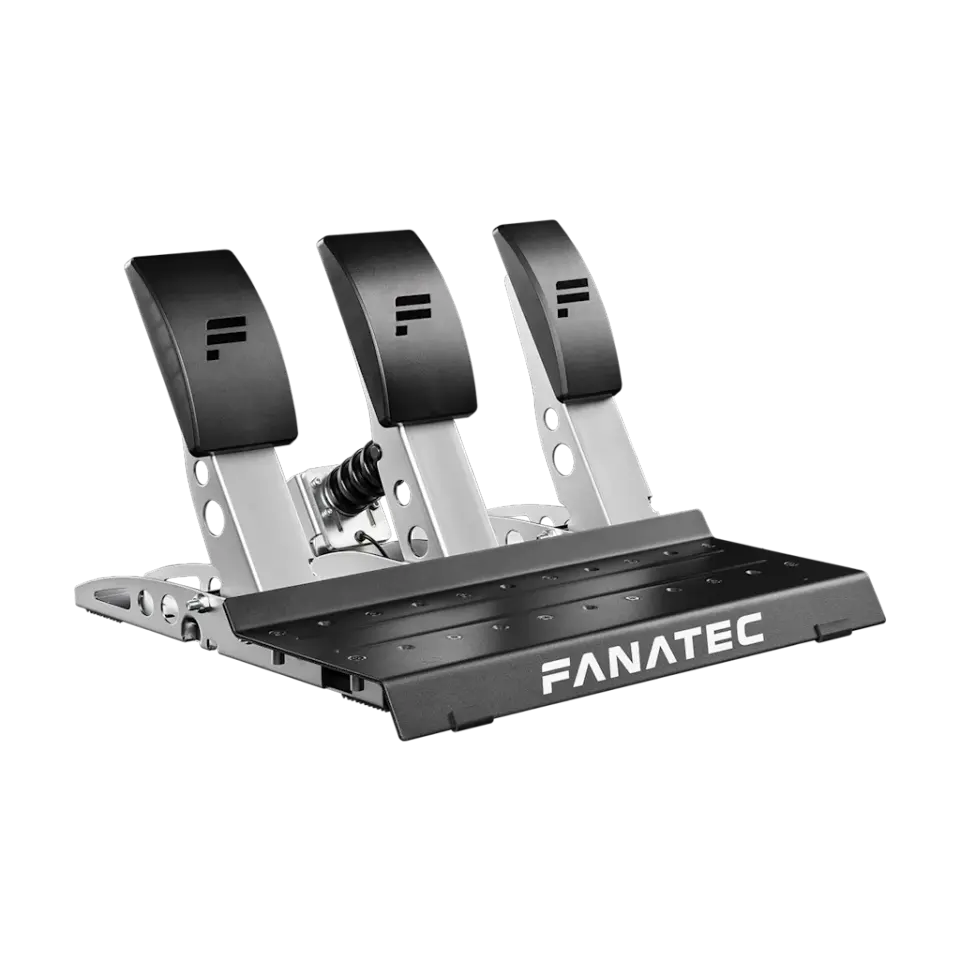
Fanatec sells a clutch kit with a Hall effect sensor for its CSL Pedals. On the CSL Pedals, fitting the load cell kit also frees up the original brake pedal, which Fanatec lets you use as a clutch.
Fanatec
Fanatec CSL Pedal Clutch Kit
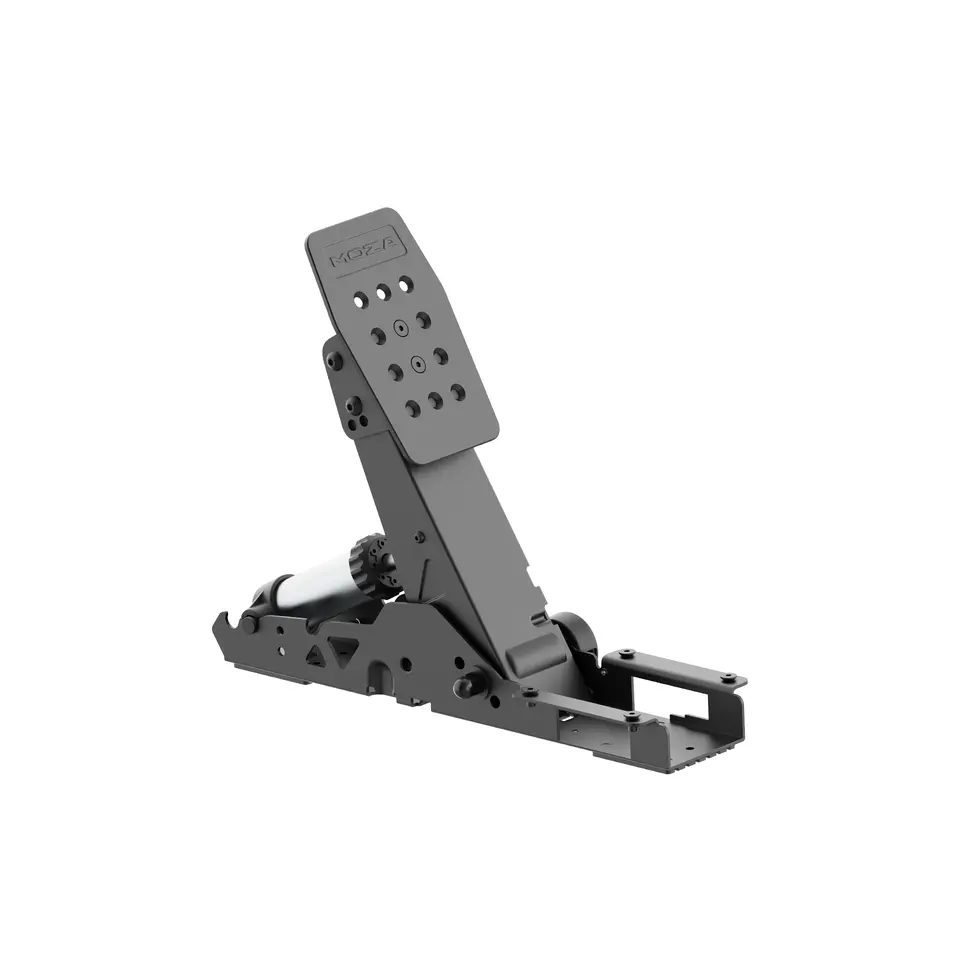
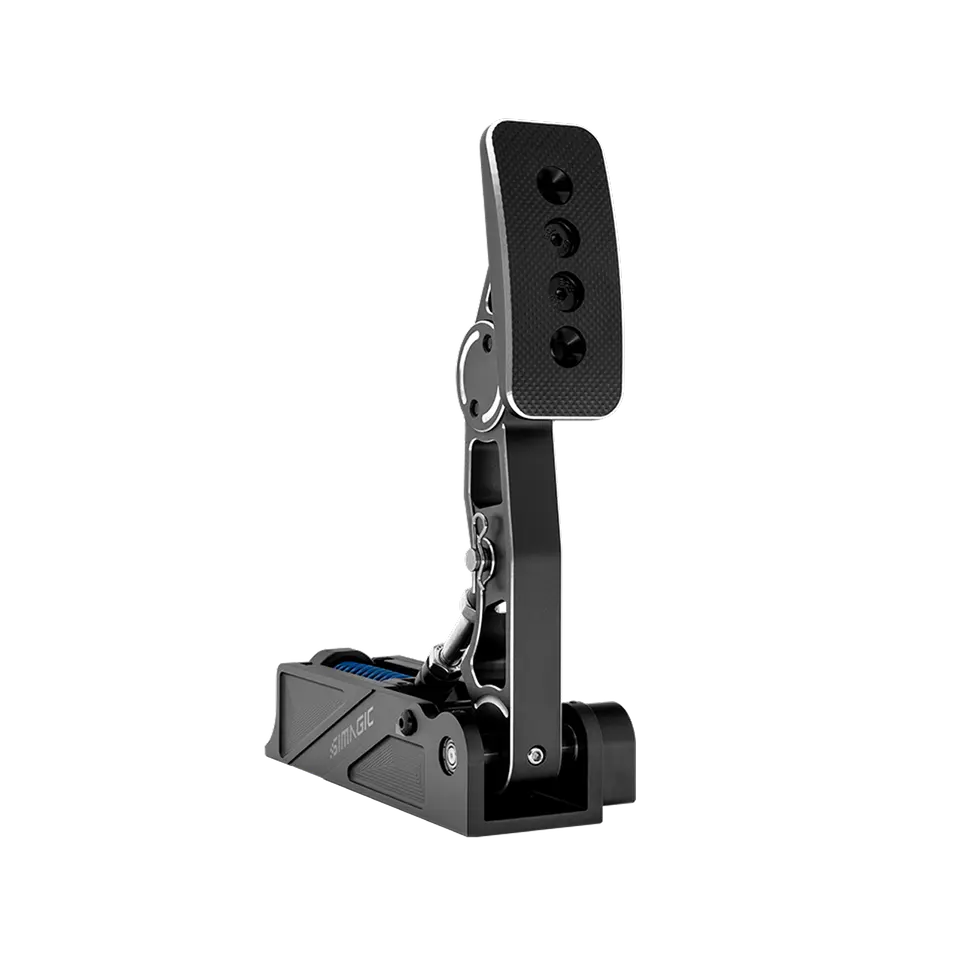
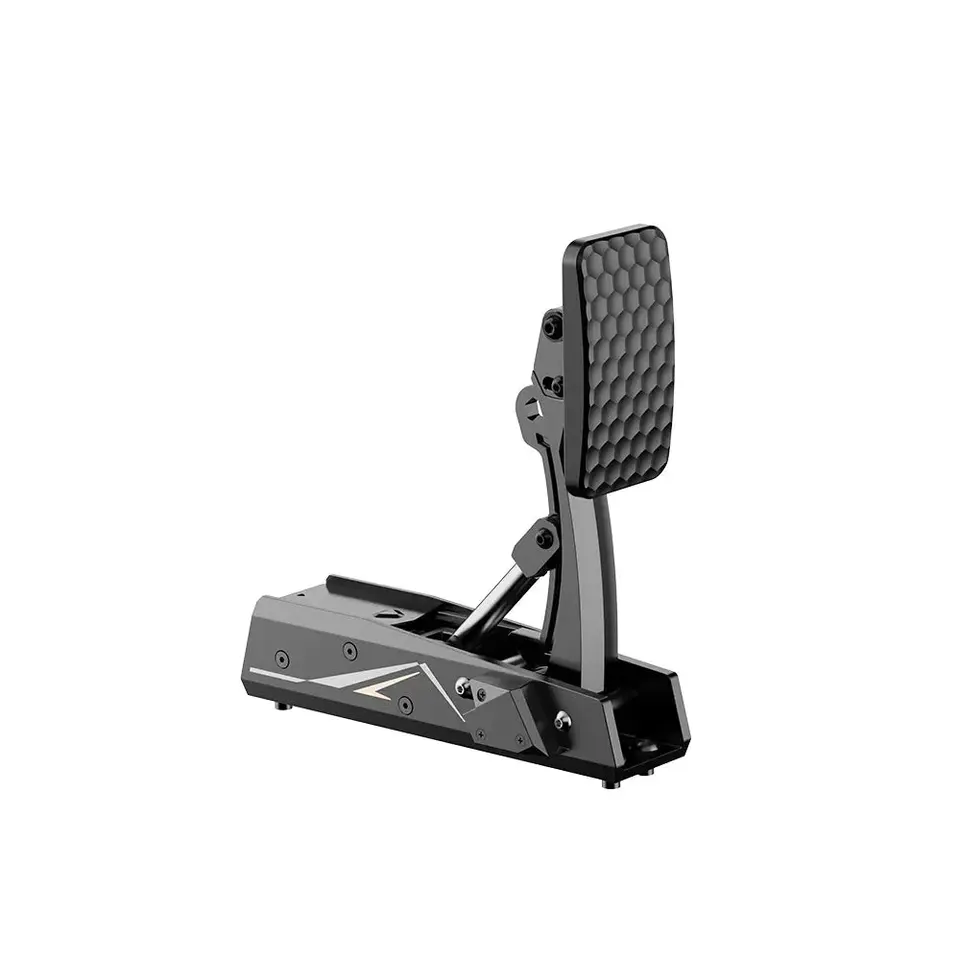
MOZA has a clutch pedal for each of its pedal sets: the SR-P Lite from the R3 and R5 bundles, SRP Lite2, SR-P, SRP2, and a load cell version for the CRP2. Simagic does the same from the P500 to the P2000, whose clutch also measures with a load cell, like the other two pedals.
MOZA Racing
MOZA SRP2 Clutch Pedal
Simagic
Simagic C-P1000
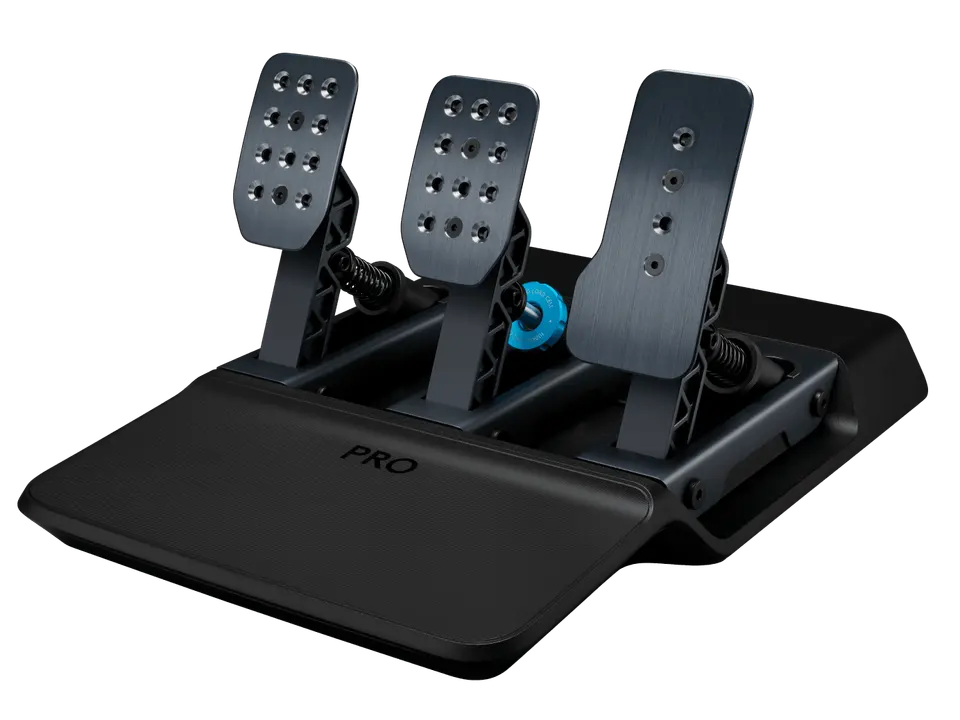
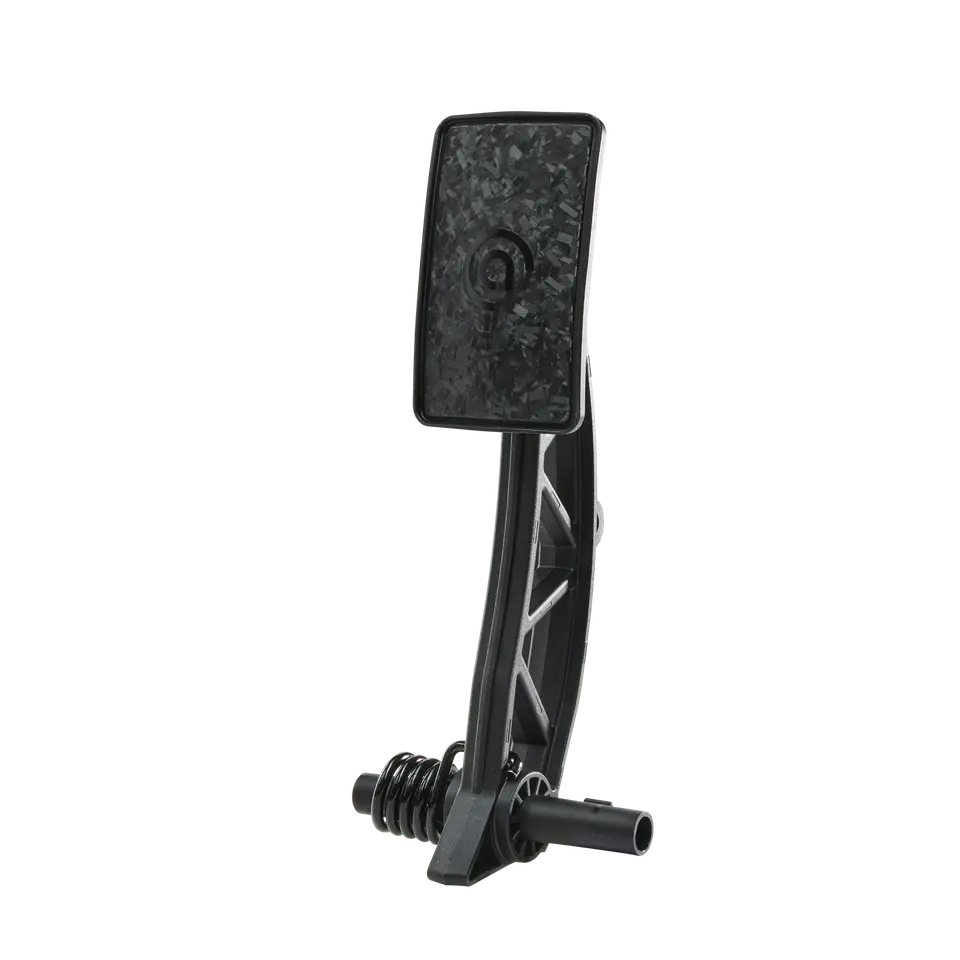
At Logitech, the RS Clutch Module, with a Hall effect sensor, completes the RS Pedals, and the RS Pedals SE keep a space for it or let you convert their brake pedal into a clutch. The PRO Racing Pedals come with three pedals. Asetek sells its pedal sets as brake and throttle, with a separate clutch system for La Prima and Invicta and a clutch pedal for the Initium. Heusinkveld sells the clutch on its own for its Sprint, Ultimate+ and RaceCenter pedal sets.
Each clutch sold separately is designed for a specific pedal set from the same brand: check the exact name of your model before ordering, and the space available on your cockpit or stand, since the pedal set grows by one pedal.
Two or three pedals when buying
Since the third pedal can be added afterwards, a two-pedal set closes no doors. A pedal set supplied with three pedals makes sense if you already know you will drive with a manual gearbox. Either way, the brake is what shapes the feel most, and our guide to load cell pedals explains why.
This article contains links to retailers. See our affiliate disclosure page.
Products mentioned
Fanatec
Fanatec CSL Pedal Clutch Kit
MOZA Racing
MOZA SRP2 Clutch Pedal
Simagic
Simagic C-P1000
MOZA Racing
MOZA CRP2 Load Cell Clutch Pedal
Asetek SimSports